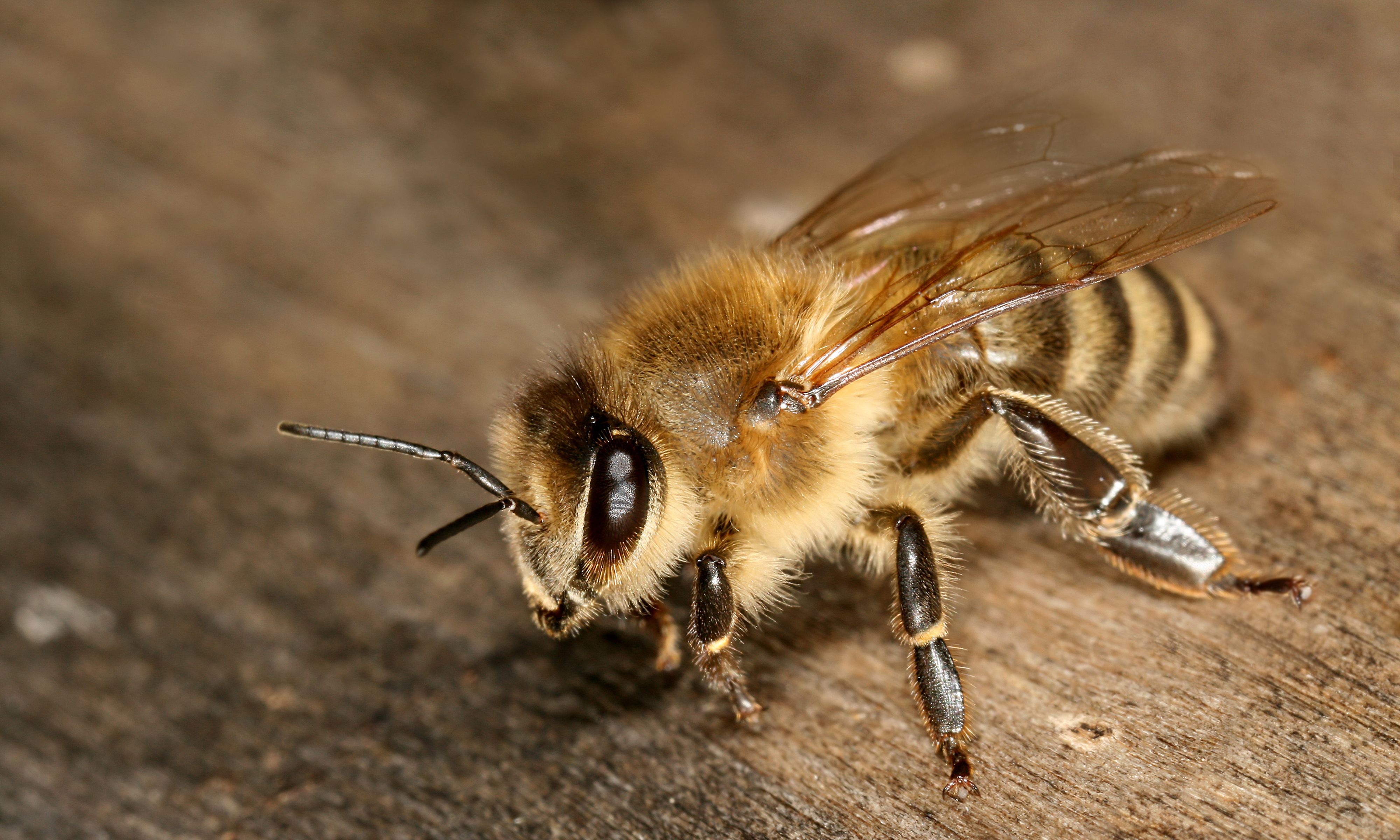
The Species: Apis mellifera in Central Europe
All managed honeybees in Poland belong to the species Apis mellifera. Within this species, several subspecies and selective breeding lines have been developed over the past century, each with distinguishable traits relevant to management and productivity. The three types most commonly encountered in Polish apiaries are Apis mellifera carnica (Carniolan), Buckfast, and native dark ecotypes derived partly from Apis mellifera mellifera.
The Polski Związek Pszczelarski (Polish Beekeepers' Association) maintains breed registers and runs queen-rearing stations in several provinces, particularly in the Mazovian, Lesser Poland, and Podlaskie regions. Their documentation provides baseline trait assessments that beekeepers can use when sourcing queens.
Carniolan Bee (Apis mellifera carnica)
The Carniolan originates from the eastern Alps and Balkans and is currently the most widely kept subspecies in Poland. Its predominance reflects a combination of traits that suit continental European conditions:
- Temperament: Generally calm during inspection. Colonies rarely exhibit excessive defensive behaviour, which is an advantage in suburban or garden apiaries.
- Spring build-up: Carniolan colonies expand rapidly in early spring when forage becomes available. This can be an asset during early flows (willow, fruit trees) but also increases the swarm impulse if the brood nest becomes congested.
- Winter economy: Colonies reduce to a small cluster in winter, consuming fewer stores than larger colonies. This trait is well-suited to Polish winters where colonies may be confined for four to five months.
- Colour: Workers are grey to silver-banded, lacking the bright yellow pigmentation seen in Italian bees.
Carniolan queens are available from domestic breeding lines. Some Polish breeders offer queens selected specifically for reduced swarming tendency or improved productivity on buckwheat and linden flows.
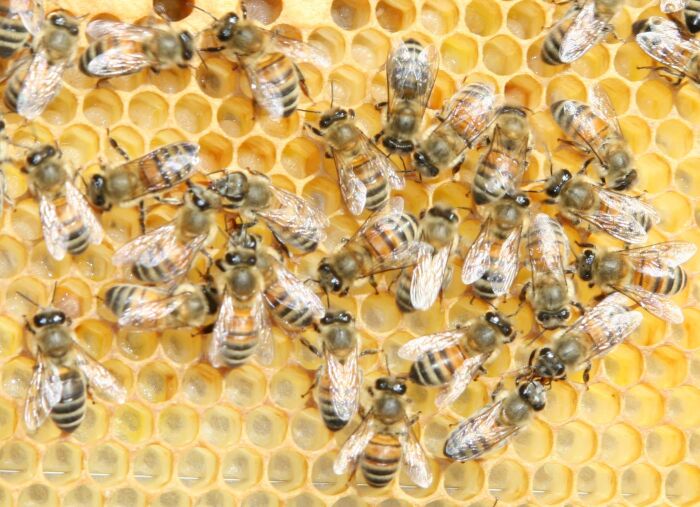
Buckfast
The Buckfast bee was developed at Buckfast Abbey in Devon, England, by Brother Adam (Karl Kehrle) beginning in the 1920s. The line was created by crossing several subspecies — primarily Apis mellifera ligustica (Italian), carnica, and others — with the goal of combining disease resistance with high productivity.
Key characteristics of Buckfast in Polish conditions:
| Trait | Buckfast | Carniolan |
|---|---|---|
| Swarm tendency | Low to moderate | Moderate to high |
| Spring build-up pace | Moderate | Rapid |
| Winter cluster size | Larger than carnica | Small |
| Temperament | Calm (pure line) | Calm |
| Varroa hygienic behaviour | Variable by breeder | Variable by breeder |
A practical note for Polish beekeepers: Buckfast crosses in the second and third generation (F2/F3) can display increased defensive behaviour. This is a well-documented outcome when queens mate with drones from unrelated Buckfast lines or with non-Buckfast drones in an open-mating area. Beekeepers using Buckfast typically requeen colonies more frequently to maintain predictable traits.
Pure Buckfast queens for Poland are often imported from specialist breeders in Germany, Denmark, and the UK. Domestic breeding of pure Buckfast requires instrumental insemination or isolated mating stations, which limits availability compared to Carniolan.
Native Dark Ecotypes
Before the widespread importation of Carniolan queens in the 20th century, much of Central and Northern Europe was inhabited by dark bees of the Apis mellifera mellifera lineage. In Poland, remnant populations of this type persist in some regions, particularly in northeastern forests near the Białowieża area, and among beekeepers who actively maintain native stock.
Dark ecotypes are characterised by:
- Darker, near-black abdominal coloration with minimal yellow banding
- Higher body weight and denser hair density compared to Carniolan
- Adaptation to the shorter foraging seasons of northern climates
- Historically, higher swarming tendency and greater defensiveness — though selected native lines exist with improved traits
Conservation of native dark ecotypes is a subject of discussion within European apicultural genetics research. Organisations such as the COLOSS network (Honey Bee Research Association) have documented the fragmented distribution of native mellifera populations across Europe. For Polish beekeepers interested in native lines, the Polskie Towarzystwo Entomologiczne has published guidance on breed identification.
Sourcing Queens in Poland
Queens are sold as mated queens (matka unasienniona) or virgin queens (matka niezasienniona). Mated queens can be introduced directly into queenless colonies after a short acclimatisation period; virgin queens require the colony to accept them before mating flights are complete.
Regional beekeeping associations hold annual queen exchanges in early summer. Prices vary by breeding line purity and the breeder's regional reputation. Queens from stations performing progeny testing — evaluating daughter colonies over a full season — command higher prices but offer more predictable colony outcomes.